
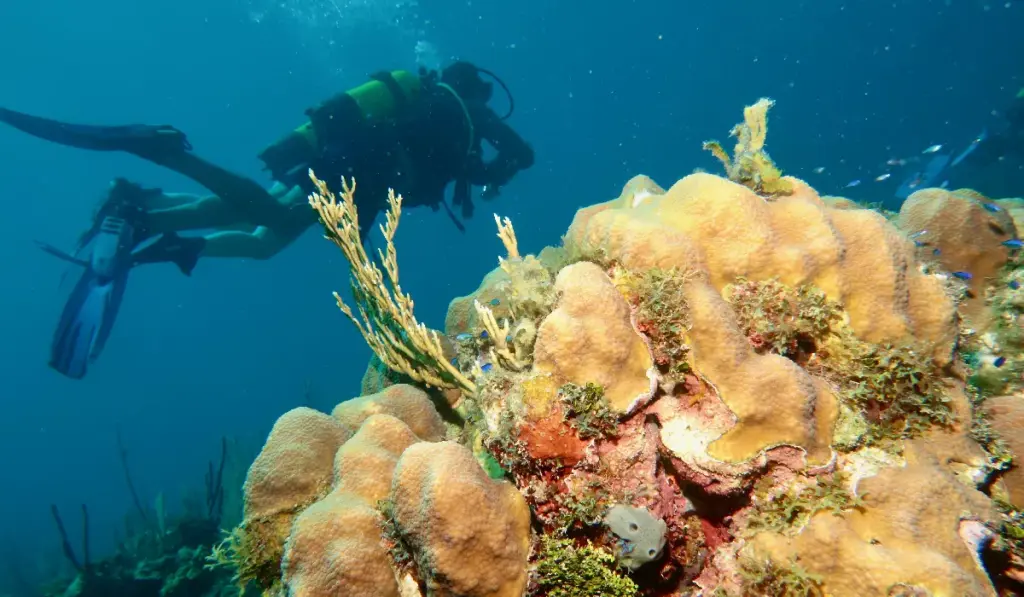
Just a short drive from Varadero, along the coast toward Matanzas, lies a place where you don’t need a boat to discover Cuba’s underwater world.
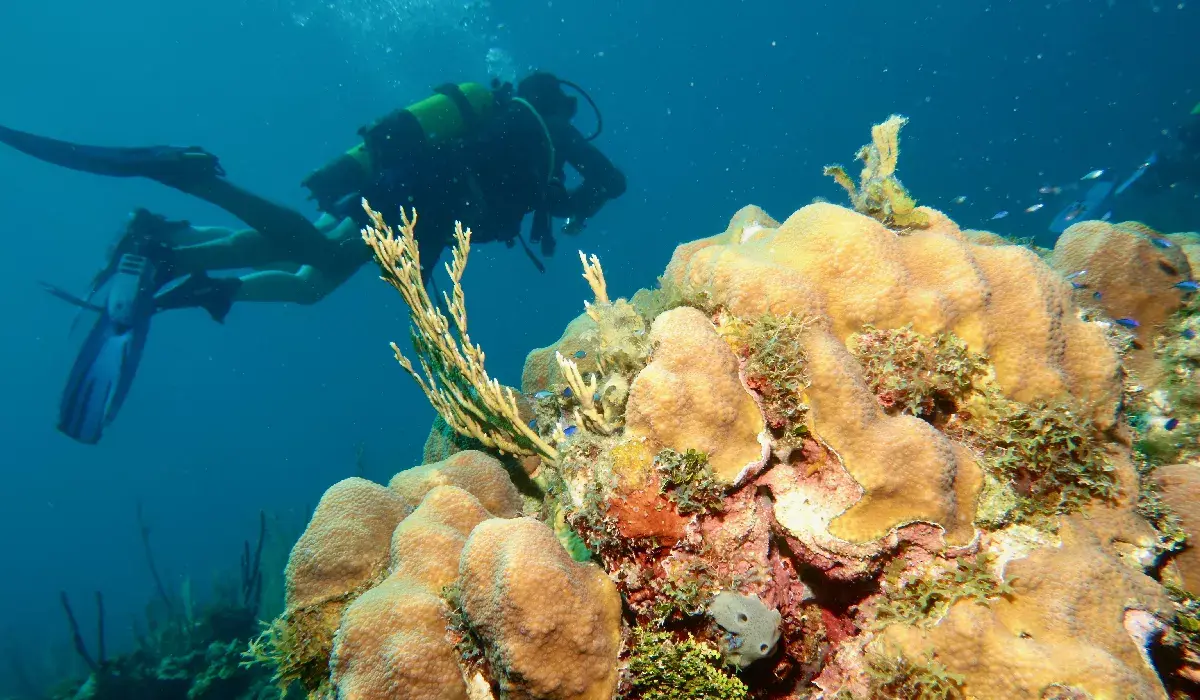
Playa Coral offers one of the most accessible ways to experience the coral reefs and marine life of the region. The reef begins practically from the shoreline, allowing visitors to enter the water directly from the beach and begin exploring almost immediately.
For snorkelers, the shallow reef provides an opportunity to observe colorful tropical fish and coral formations from the surface.
For scuba divers, several routes through the reef offer different depths and underwater environments, making Playa Coral suitable for Discover Scuba participants, certified beginners and more experienced recreational divers.
And perhaps most importantly, you don’t have to spend hours on a boat to get there.
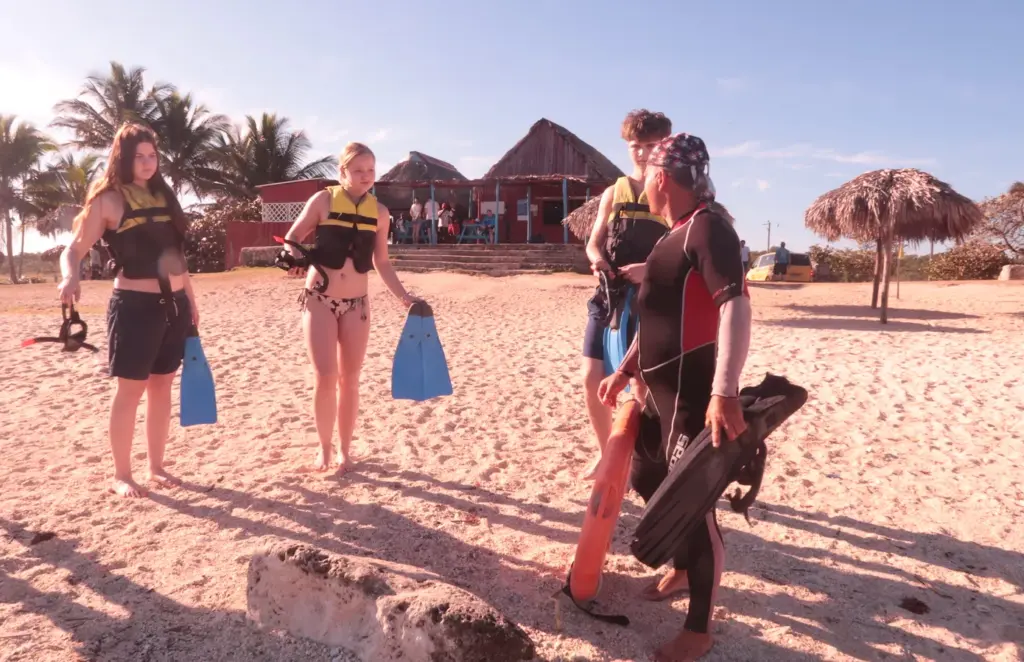
At Playa Coral, the adventure begins from the shore.
At Scuba Vida, we regularly explore different routes through this reef, adapting the experience to the certification, experience, air consumption and comfort level of each diver.
At a Glance
 Location Location | Playa Coral, between Varadero and Matanzas, Cuba |
 Dive Type Dive Type | Shore diving — no boat required |
 Beginner Depth Beginner Depth | Approximately 8–9 m / 26–30 ft |
 Certified Divers Certified Divers | Approximately 12–16 m / 39–52 ft |
 Experienced Divers Experienced Divers | Up to approximately 20 m / 66 ft on selected routes |
 Typical Dive Time Typical Dive Time | Approximately 45–50 minutes |
 Surface Interval Surface Interval | Approximately 40 minutes between dives |
| Discover Scuba | Normally 1 dives + optional second dive |
| Snorkeling | Up to approximately 1 hour |
 Marine Life Marine Life | Chopas, Doctor Fish, Parrotfish, Yellow Snapper, Butterflyfish, Isabelitas & more |
 Special Features Special Features | Coral reef, different shore-diving routes & small underwater caverns |
 Best For Best For | Snorkelers, beginners, certified divers, photographers & experienced divers |
Depth and dive duration are adapted to each diver’s experience, air consumption, comfort level and the conditions of the day.
Why Playa Coral Is Special
Playa Coral is located between Varadero and Matanzas, making it a convenient destination for visitors staying in either area.
The reef begins very close to shore, so scuba divers can enter the water by walking from the beach rather than boarding a dive boat.
This makes Playa Coral particularly attractive to:
- First-time divers
- Discover Scuba participants
- Certified divers
- Underwater photographers
- Snorkelers
- Families and non-diving companions
- Travelers who prefer shore diving to boat diving
- People who are uncomfortable or prone to seasickness on boats
The underwater environment is surprisingly varied for a reef that is so accessible.
Different routes allow us to explore shallow coral areas, deeper reef sections and, for experienced divers, small underwater caverns and more advanced sections of the reef.
The reef itself is home to a wide variety of tropical fish, corals, sponges and crustaceans.
Snorkeling at Playa Coral
You don’t have to be a scuba diver to experience the marine life of Playa Coral.
Snorkelers can explore the same reef environment that divers visit, staying in the shallower areas while observing marine life from the surface.
The reef’s fish are not restricted to one particular section. They move throughout the reef, meaning that snorkelers can encounter many of the same species divers see during their underwater routes.
Depending on the day, you may encounter:
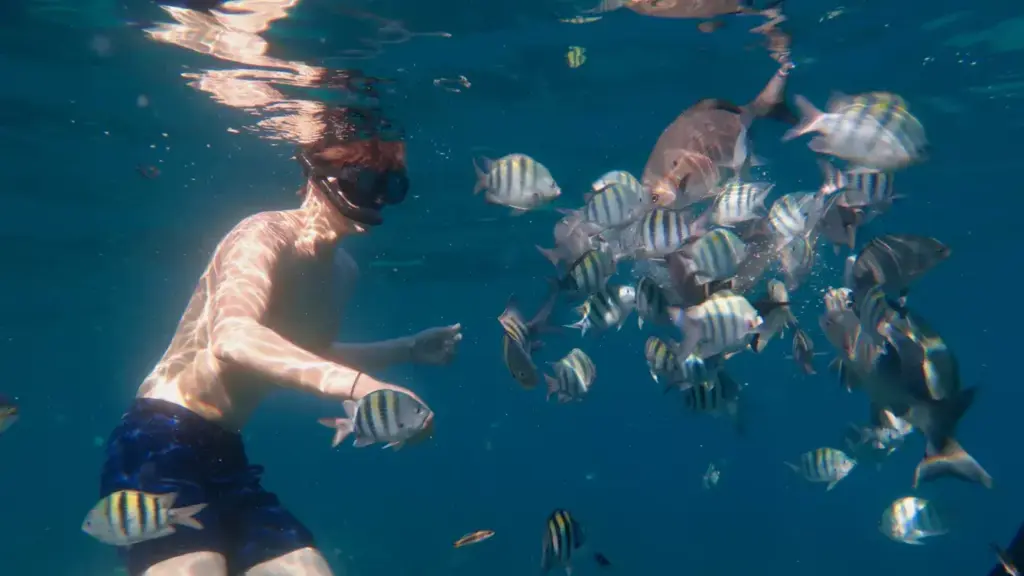
- Chopas
- Doctor Fish
- Parrotfish
- Yellow Snapper
- Butterflyfish
- Isabelitas
- Other colorful tropical reef fish
Snorkeling sessions can last up to approximately one hour, depending on conditions and the preferences of the participants.
After the water adventure, visitors can also enjoy the small beach area and relax before continuing their day.
For travelers who don’t dive, this makes Playa Coral an excellent way to experience Cuba’s underwater world without scuba certification.
Scuba Diving at Playa Coral
For scuba divers, Playa Coral offers several different routes through the reef.
The route and depth are selected according to each diver’s experience, air consumption, comfort level and the conditions of the day.
Discover Scuba Diving
For beginners experiencing scuba diving for the first time, we normally explore depths of approximately 8–9 meters (26–30 feet).
The shallow environment allows new divers to concentrate on breathing, buoyancy, communication and enjoying the underwater experience without immediately entering deep water.
A typical Discover Scuba experience includes two dives at Playa Coral, with an approximate 40-minute surface interval between them.
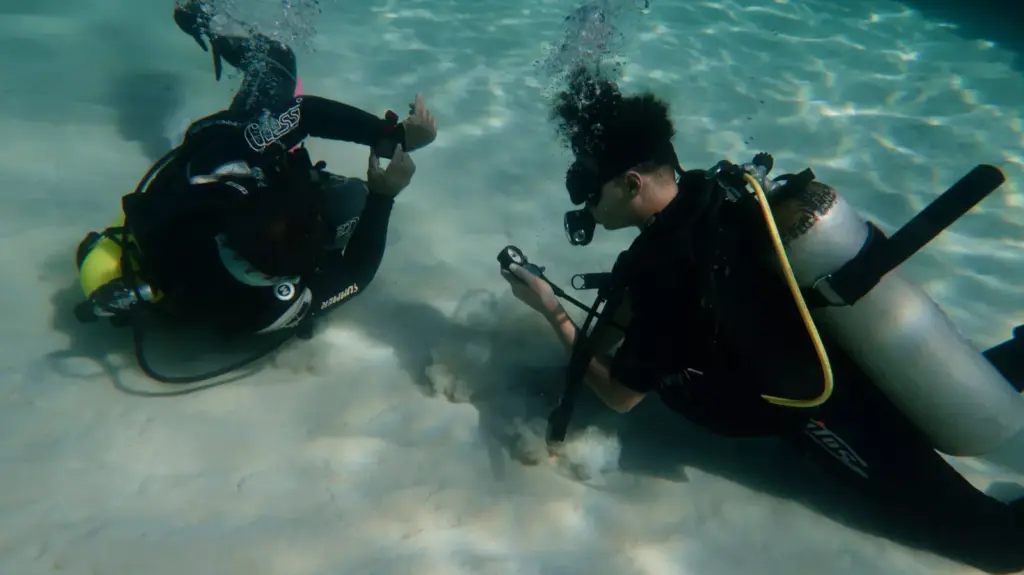
An optional third dive may also be available for participants who want to extend their experience and conditions allow.
Diving Depths for Certified Divers
Playa Coral can also accommodate certified recreational divers with different levels of experience.
For divers with certification but limited experience, dives may reach approximately 12 meters (39 feet).
More experienced recreational divers can normally explore sections reaching approximately 16 meters (52 feet).
With well-prepared and experienced divers, selected routes can occasionally reach approximately 20 meters (66 feet).
However, depth is never the objective by itself.
The maximum depth and route depend on several factors, including:
- Diver experience
- Air consumption
- Comfort and buoyancy
- Current and sea conditions
- Dive planning
- The experience of the rest of the group
Our priority is always to choose a dive profile appropriate for the people in the water that day.
How Long Is a Dive at Playa Coral?
A typical scuba dive at Playa Coral lasts approximately 45–50 minutes.
Actual dive time varies from diver to diver.
Air consumption is one of the most important factors. A diver with efficient breathing and good buoyancy may remain underwater longer than someone who consumes air more quickly.
This is completely normal.
The objective isn’t to stay underwater for a predetermined number of minutes. The dive ends according to the available air supply, the planned profile and the conditions of the dive.
For Discover Scuba participants, two dives are normally separated by an approximately 40-minute surface interval, giving divers time to rest, hydrate and discuss the first experience before entering the water again.
Shore Diving Without a Boat
One of Playa Coral’s biggest advantages is right there in its name and location:
You don’t need a boat to dive the reef.
The reef begins practically from the shore.
Divers enter the water by walking from the beach and begin their dive without a long boat journey.
This offers several advantages:
More time underwater
Instead of spending a significant part of the day traveling to an offshore reef, you can dedicate more of your time to the actual diving experience.
Ideal for people who get seasick
If you don’t enjoy boat trips or are prone to seasickness, shore diving can make your diving holiday much more comfortable.
Easy logistics
There is no need to coordinate a long offshore boat trip just to reach the reef.
Flexible dive routes
Because there are several routes through the reef, local guides can choose an appropriate profile according to the divers and conditions.
An Extended Shore Dive for Experienced Divers
For experienced divers, Scuba Vida can sometimes offer a longer shore-diving route.
On selected dives, we enter the water approximately 600–700 meters from Playa Coral descent and swim along the coral reef.
The dive then continues toward Playa Coral, where we exit the water.
This route requires additional planning and is more appropriate for experienced divers because the longer surface swim and overall profile require greater attention to air consumption and physical condition.
It is generally better suited to divers who already have some recent diving experience rather than someone completing their first dive.
Small Underwater Caverns
Playa Coral also contains small underwater caverns and interesting formations that add another dimension to the dive.
These areas are not something we treat as an introductory activity.
We explore them only with divers who have appropriate previous experience and are comfortable in this type of underwater environment.
For experienced divers, these small formations can make the reef particularly interesting because they provide opportunities to explore beyond the open reef and observe marine life sheltering in darker, protected spaces.
The goal is exploration while maintaining appropriate limits and good diving practices.
Marine Life at Playa Coral
One of the most enjoyable things about Playa Coral is that the marine life isn’t concentrated in just one spot.
Fish move throughout the reef, so snorkelers and divers can encounter interesting species at different points along their route.
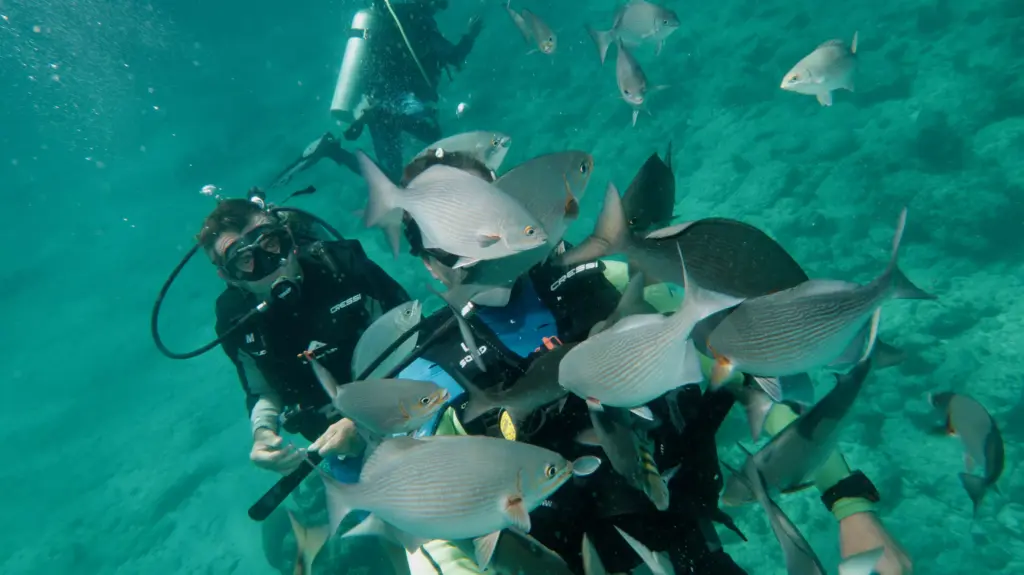
Chopas
Chopas are among the fish that our divers often find particularly curious.
Their behavior and appearance make them interesting subjects for observation and underwater photography.
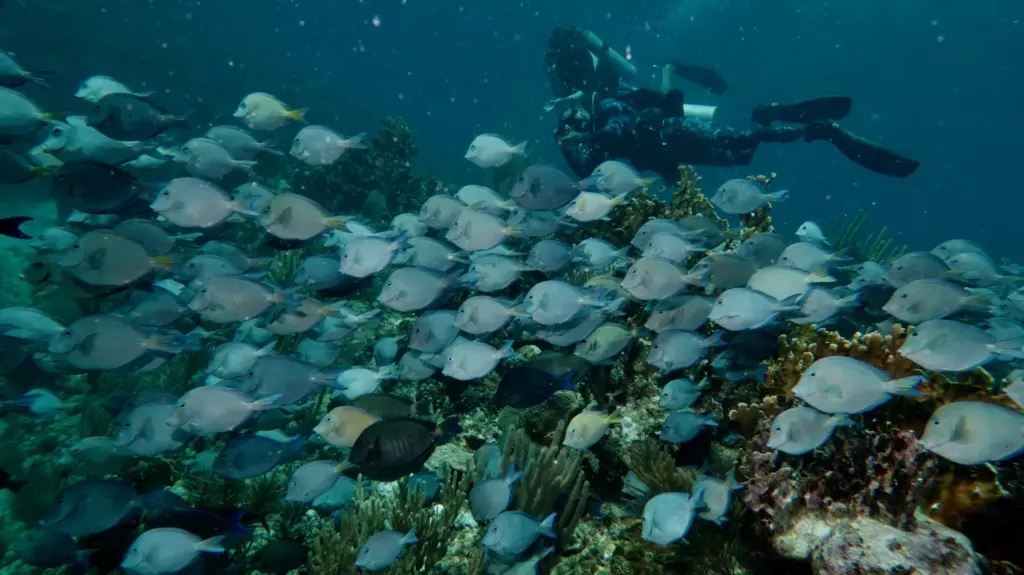
Doctor Fish
Schools of Doctor Fish can sometimes be seen moving through the reef and participating in natural cleaning behavior.
Watching these fish interact with the reef is one of those small underwater moments that can turn an ordinary dive into a memorable one.
Parrotfish
Parrotfish are a familiar sight around the coral reef.
They constantly graze on the reef and play an important role in maintaining healthy coral ecosystems.
Yellow Snapper
Yellow Snapper add movement and color to the reef and can often be seen moving through the coral formations and surrounding water.
Butterflyfish
Several species of butterflyfish can be encountered around Playa Coral.
Their bright patterns make them particularly attractive to underwater photographers.
Isabelitas
Isabelitas are another common reef fish that divers and snorkelers can encounter during their exploration.
And these are only some of the species you may encounter.
Every dive is different.
Playa Coral for Underwater Photography
The relatively shallow reef environment makes Playa Coral particularly interesting for underwater photography.
Shallow water provides good natural light, while the variety of fish and coral formations creates opportunities for both wide-angle and close-up photography.
Photographers can look for:
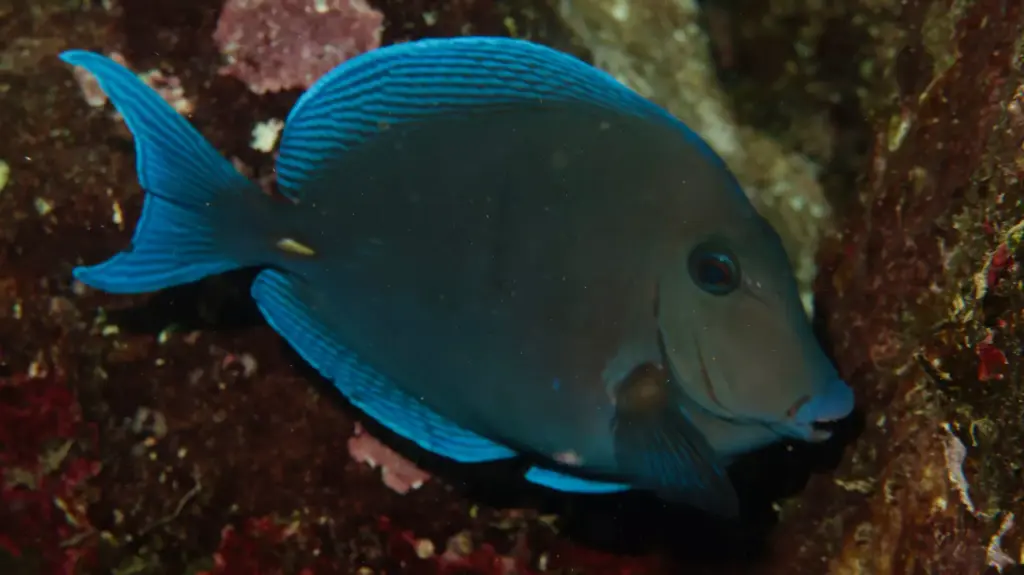
- Reef scenes
- Schools of fish
- Butterflyfish
- Parrotfish
- Doctor Fish
- Coral formations
- Small crustaceans
- Divers interacting with the reef
Photography also teaches an important diving lesson:
Slow down.
Instead of swimming continuously around the reef, staying in one area for a few minutes can reveal behavior and encounters that you would otherwise miss.
Snorkeling or Scuba Diving?
Both experiences offer a different way to explore the same reef.
| Experience | Snorkeling | Scuba Diving |
| Certification | Not required | Required unless Discover Scuba |
| Access | From shore | From shore |
| Depth | Shallow water | Approximately 8–20 m depending on experience |
| Typical duration | Up to 1 hour | Approximately 45–50 minutes |
| Marine life | Excellent | Excellent |
| Equipment | Mask, snorkel & fins | Full scuba equipment |
| Best for | Families & casual explorers | Divers & adventure seekers |
And you don’t necessarily have to choose one.
A group can combine scuba diving and snorkeling, allowing divers and non-divers to enjoy the same reef environment during the same excursion.
When Is the Best Time to Visit Playa Coral?
Playa Coral can be enjoyed throughout the year.
There isn’t one specific month when the reef suddenly becomes a good diving destination.
Water temperature, rainfall, tides and local sea conditions can influence visibility and comfort, but conditions can vary considerably from one day to another.
During periods of heavier rainfall, runoff can temporarily affect visibility in some coastal areas.
Tides can also influence water clarity near areas affected by freshwater runoff.
This is why local knowledge matters.
At Scuba Vida, we don’t simply look at the month on the calendar.
We look at the conditions of the day.
When necessary, we can adapt the route or choose another nearby dive site to provide the best possible experience.
Responsible Snorkeling and Diving
Playa Coral is a living ecosystem.
Every visitor has a responsibility to help protect it.
Whether you’re snorkeling from the surface or scuba diving below it:
- Maintain good buoyancy.
- Avoid touching coral.
- Never stand on the reef.
- Don’t chase or feed marine animals.
- Keep your fins away from coral formations.
- Don’t collect shells, coral or marine organisms.
- Avoid disturbing small animals hiding in the reef.
- Use reef-conscious sunscreen whenever possible.
- Take photographs instead of souvenirs.
The goal is simple:
Enjoy the reef without damaging it.
Why Explore Playa Coral with Scuba Vida?
Playa Coral may be easy to reach, but choosing the right route and profile can make a significant difference to the experience.
At Scuba Vida, we adapt our dives to the people in the water.
A first-time diver doesn’t need the same profile as an experienced recreational diver.
A snorkeler doesn’t need the same route as a scuba diver.
And a photographer may benefit from a completely different pace.
That’s why we don’t treat every Playa Coral excursion exactly the same.
We look at the people, the conditions and the reef and then choose the experience that makes the most sense.
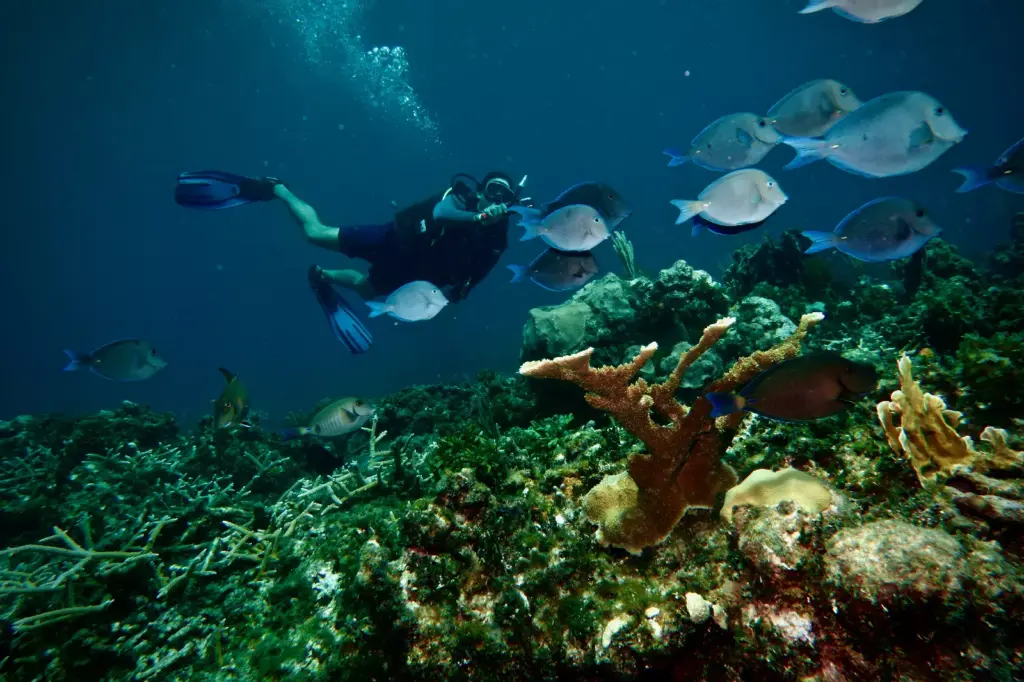
Plan Your Playa Coral Adventure
Whether you want to spend an hour snorkeling above the reef, experience scuba diving for the first time or explore deeper sections as a certified diver, Playa Coral offers an accessible way to discover Cuba’s underwater world.
No long boat trip.
No complicated logistics.
Just a walk from the beach, clear Caribbean water and a living coral reef waiting below the surface.
Explore Playa Coral with Scuba Vida and discover why this reef is one of our favorite places to introduce visitors to Cuba’s underwater world.
Continue Exploring
Local Insight from Scuba Vida
One of the things we love about Playa Coral is that the reef starts almost from the beach.
You don’t need a boat to discover a surprising amount of marine life here. Our beginners usually explore around 8–9 meters, while certified and more experienced divers can progressively explore deeper sections of the reef.
The most important thing is not how deep you go or how long you stay underwater. We choose the route according to your experience, air consumption and the conditions of the day.
And don’t rush. Some of the most interesting encounters happen when you stop, look closely and let the reef come to you.
— The Scuba Vida Team
About Scuba Vida
Scuba Vida is a local dive center serving divers and travelers in Varadero and Matanzas, Cuba.
Our instructors and local dive guides explore Cuba’s reefs throughout the year, adapting each experience to the conditions of the day and the needs of our guests.
We believe great diving is not only about what you see underwater, but also about protecting the marine environment that makes these experiences possible.